
Eight things to check before you sign, from a firm that has built in Dehradun since 1971.
 Ranbir Singh SawhneyDesignated Partner, Sawhney Buildwell LLP
4 min read
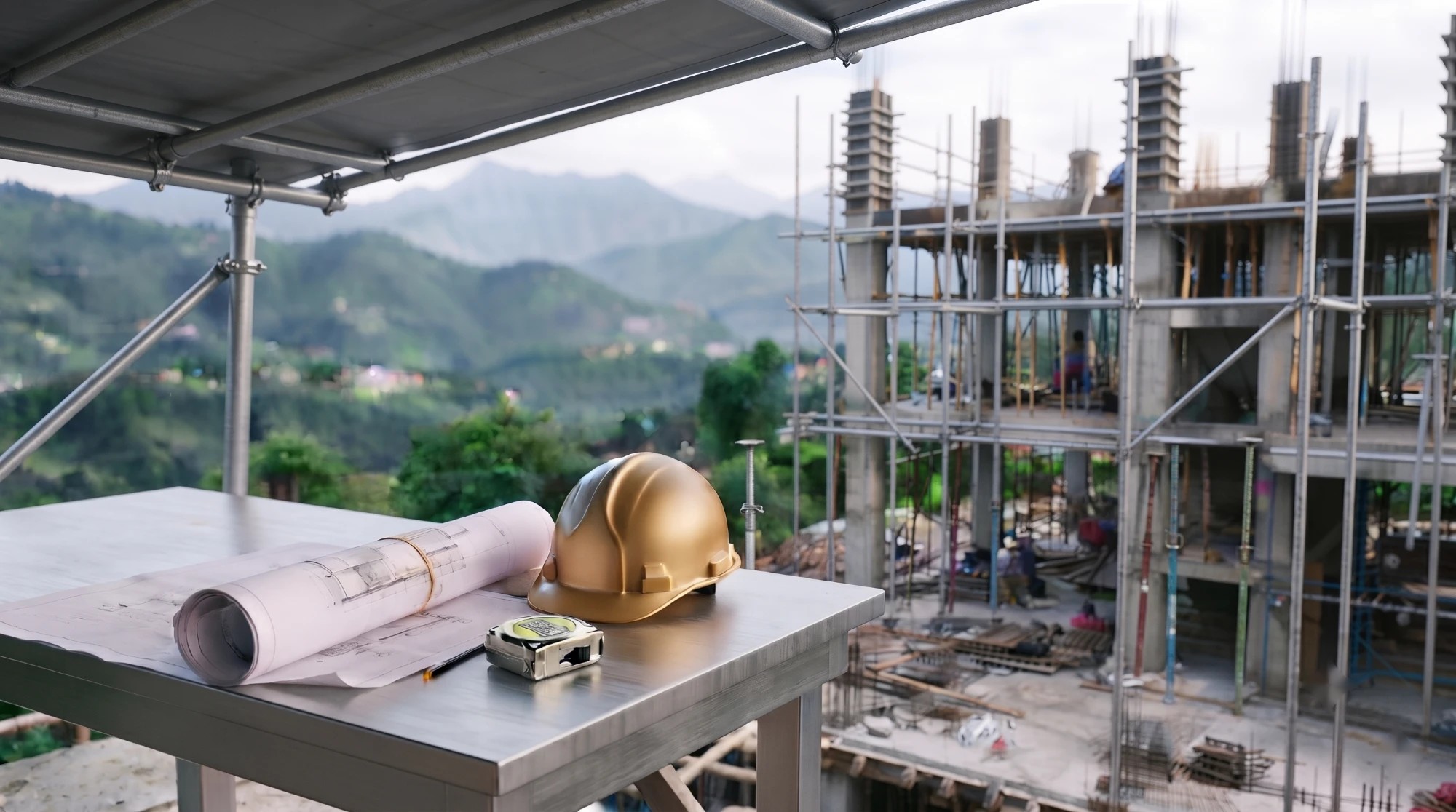
A building is often the largest single investment a school, a hospital or a family will make, and the contractor shapes how it turns out for decades. The choice deserves the same care as the design. After more than 250 projects in 15 cities, these are the eight things we would check if we were in your place.
- Sawhney Buildwell at a glance
- 1971Building in Dehradun since
- 250+Projects
- 15Cities
- Class SSMES enlistment, the highest class
1. Finished buildings you can visit
Ask for three finished buildings of a similar kind and go and see them, ideally ones that have stood for a few years. Look closely at the plaster lines, the joints around window frames, the finish on the stairs and the ceilings below the terrace after rain. Then speak to the people who use the building every day, and ask how quickly any defects were put right. A good contractor will be glad to arrange the visit. In Dehradun our work stands at the Indian Military Academy, DIT University, ONGC Colony and the Himalayan Institute Hospital Trust, and we arrange visits whenever a client asks.
2. Records from past clients
Government and institutional clients issue a performance report or a completion certificate when a job ends. These record the start and finish dates, the value of work and how the client rated the contractor on quality, financial soundness, technical skill and conduct. Ask to read them. They tell you more than any brochure.
Outstanding on all five counts
Indian Military Academy, performance report for the Olympic size indoor pool, 2020
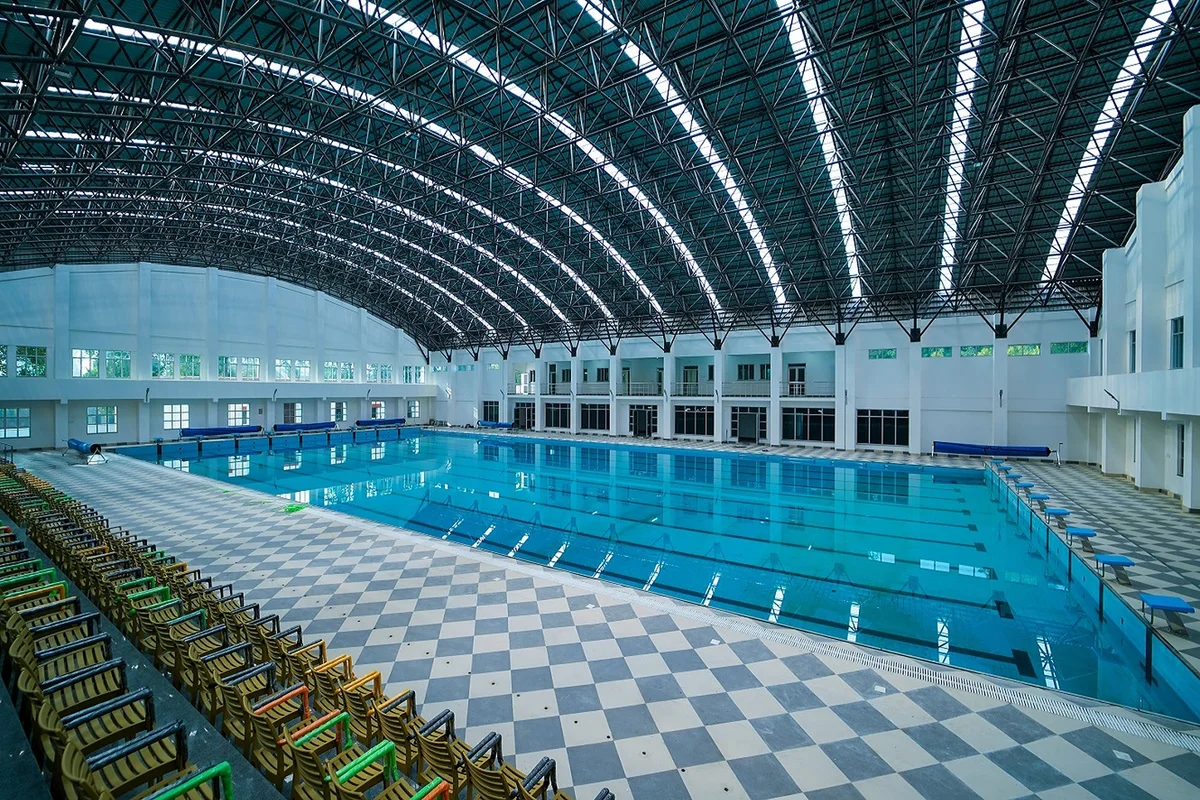
That rating came for the Olympic size indoor pool we handed over to the Academy in December 2020. At Clement Town, each of four housing phases for 14 Signal Regiment was handed over 170 days before its contracted date. You can read these and others in our case studies.
3. Enlistment and registration
The Military Engineer Services enlists contractors by class, based on their financial strength and the work they have completed. Our enlistment is Class SS, the highest class, with an unlimited tendering limit. Enlistment is a useful sign that someone outside the company has checked its record. Ask also for the firm’s registration, its GST number and its bankers. Our registration and enlistment are on our credentials page.
4. A firm the right size for your job
Ask for audited turnover for the last three years and for the largest job of a similar kind the firm has completed. A contractor whose usual work is close to the size of your project will plan it well, staff it well and keep enough in reserve to carry it through a slow month. Ask too how many projects the firm is running today, and where yours would sit among them.
5. Who makes the drawings
Be clear from the start about the drawings. A contractor can build to your own architect’s drawings, bring in approved design partners and take the whole job as design and build, or take it as a turnkey contract from drawings to handover. All three work well when the responsibility for design is written into the contract. See the three ways we work.
6. The people who will run your site
A firm’s name wins the contract, and its site team builds the building. Ask who will be the project manager, the site engineer and the safety officer on your job, and meet them before work begins. Ask how many sites each of them will look after at the same time. The best sign is a team that stays with your building from the first day to handover.
7. Safety on a running site
Visit one of the contractor’s live sites. Look for helmets and harnesses in use, steel scaffolding with guard rails at every open edge, clear walkways, stacked materials and a safety officer on duty. A tidy, safe site is almost always a well run one, and it is the clearest sign of how your own site will be kept.
8. Payments that follow progress
Agree a payment schedule tied to measured work: foundations, each floor slab, the frame, finishes and handover. It keeps both sides clear about what has been done, and payments made on time keep the site moving at an even pace. Many contracts also list the cost of steel separately, so that both sides pay a fair price on the day it is bought.
A short checklist
- Three finished buildings visited, and their users spoken to
- Performance reports or completion certificates read
- Enlistment, registration and bankers confirmed
- Turnover and the largest similar job checked against your project
- Responsibility for the drawings written into the contract
- Project manager, site engineer and safety officer met
- A live site visited
- A payment schedule tied to measured work
Every one of these is something we are glad to show. Send us your drawings, or call us to arrange a visit to one of our sites.
Leave a comment